



Babywearing News
Choosing Your First Baby Wrap: Materials, Size & Ergonomics — Your Beginner’s Guide to Wraps & Ring Slings
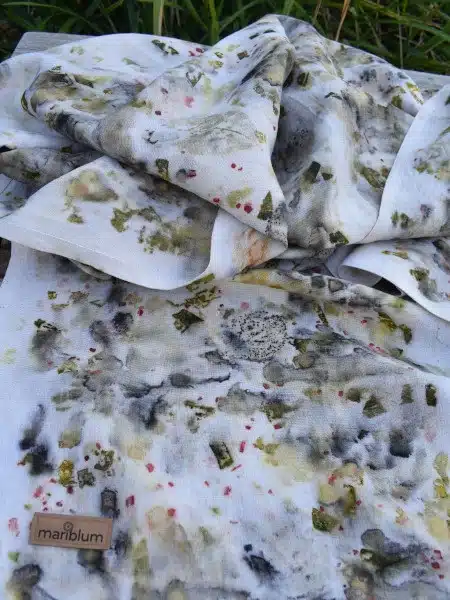
Choosing your very first baby wrap or ring sling can feel overwhelming. With a little guidance, you’ll quickly find the companion that truly fits you, your baby, and your everyday life — comfy, safe, and beautiful.
Table of ContentWhy a wrap or ring sling?
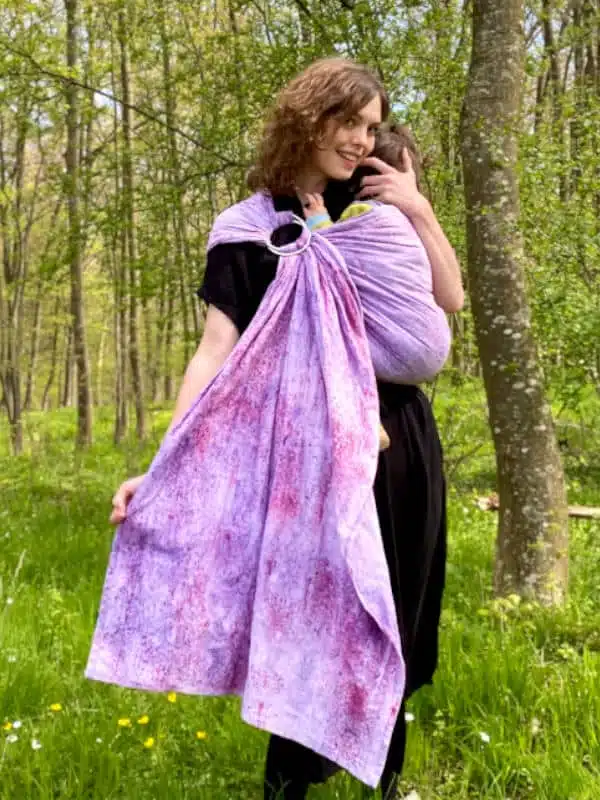
Wraps and ring slings bring your baby to kissable height and create a deep sense of security. At the same time, you keep your hands free for errands, walks, and life at home. Skin-to-skin contact supports bonding and helps many babies self-regulate (warmth, rhythm, your voice). Both systems place the weight close to your center of gravity and can ease strain on your back and pelvic floor.
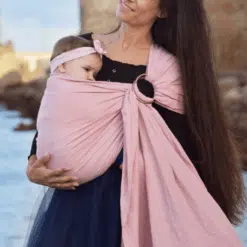
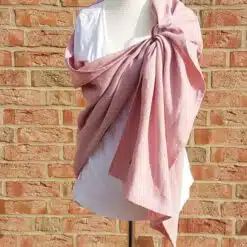
Linen Fabric
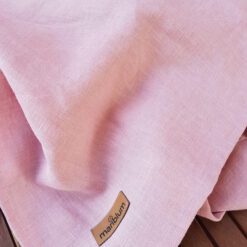
Linen Fabric
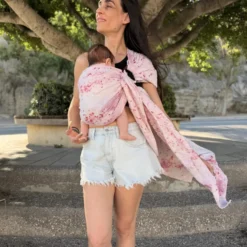
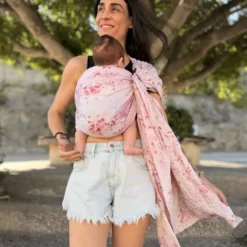
Hemp Fabric
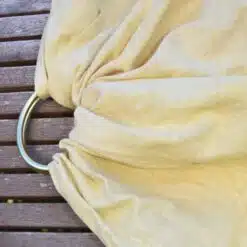

Linen Fabric
What to look for

- Material: breathable, skin-friendly, supportive.
- Size/adjustability: fits your body and any co-wearer.
- Positions: options for front, hip (later back with experience).
- Support: even weight distribution, ergonomic seat.
- Style: a design you’ll love to wear often.
Material basics
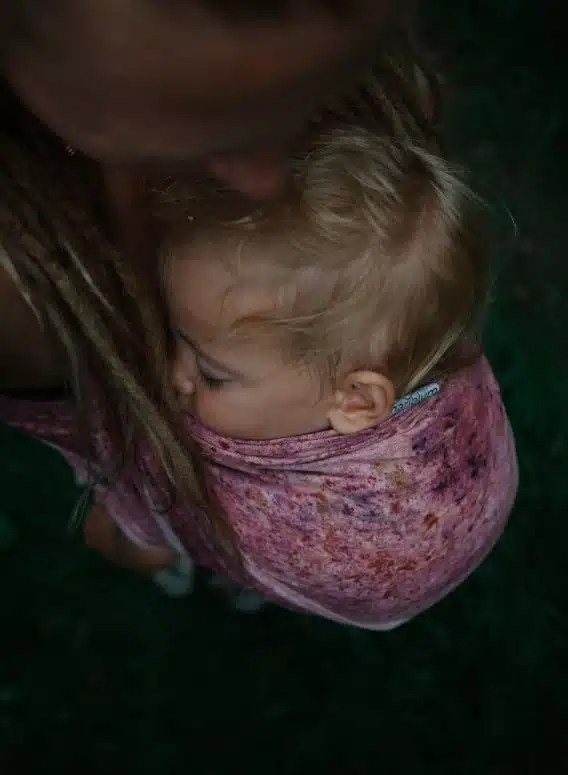
Cotton: soft, easy-care, year-round — a great starter.
Linen: cool and very supportive, softens with wear — a summer favorite.
Hemp: extra sturdy with great grip; ideal if you prefer a firm hold.
Bamboo-viscose blends: ultra soft and gentle; pair with supportive fibres for structure.
Tip: Jacquard-woven wraps often mold beautifully; classic broken twill is robust and beginner-friendly.
Size & adjustability
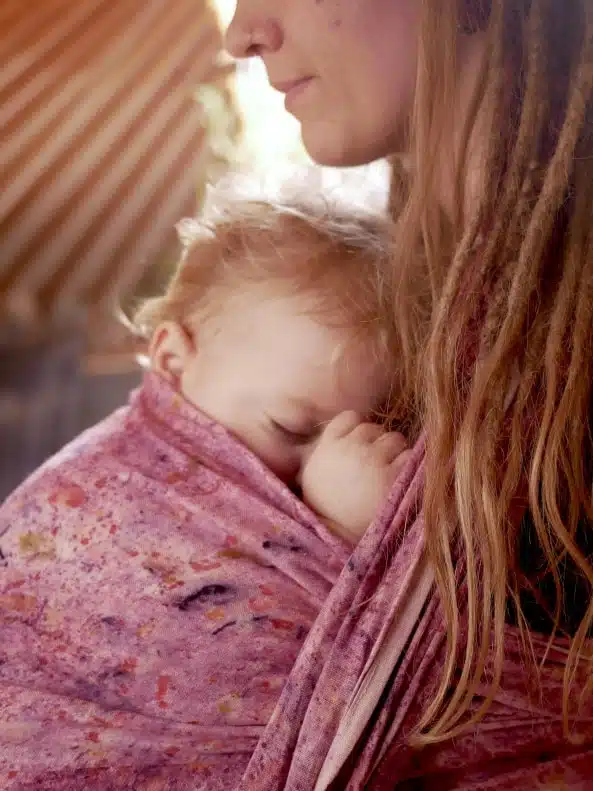
Woven wraps commonly come in sizes 4–7 (guided by height/clothing size). A size 6 is a popular, versatile starter. Ring slings are typically one size; ensure the tail is long enough for strand-by-strand tightening. If you share babywearing, pick a setup that works for both wearers.
Carrying positions & everyday use
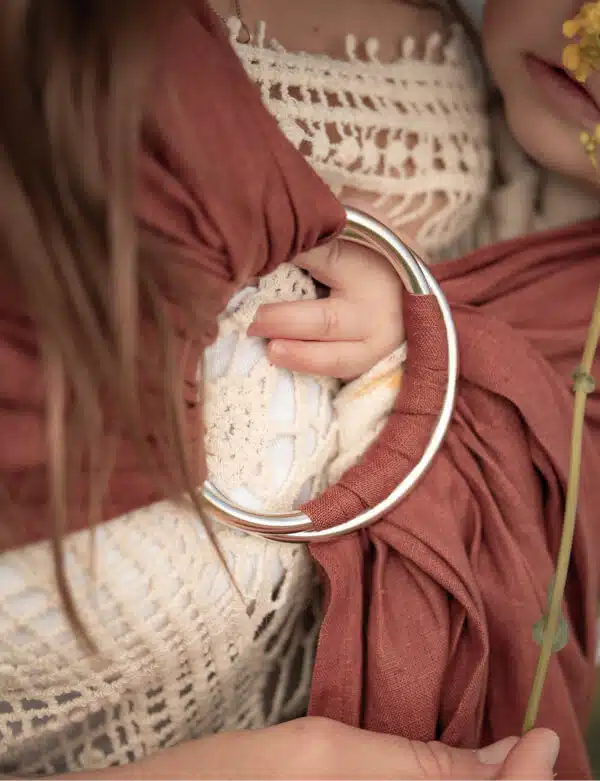
Front carry (early months): maximum closeness and eye contact; nursing is often easier to manage.
Hip carry (once head control is solid): baby sees more while you offload your midline.
Back carry (later, with practice/support): great for longer walks or housework.
Everyday hack: Ring slings excel at quick ups & downs (doorbell, preschool drop-off, stairs). Wraps shine for longer carries with very even weight distribution.
Linen Fabric
Linen Fabric
Hemp Fabric
Linen Fabric
Support & ergonomics
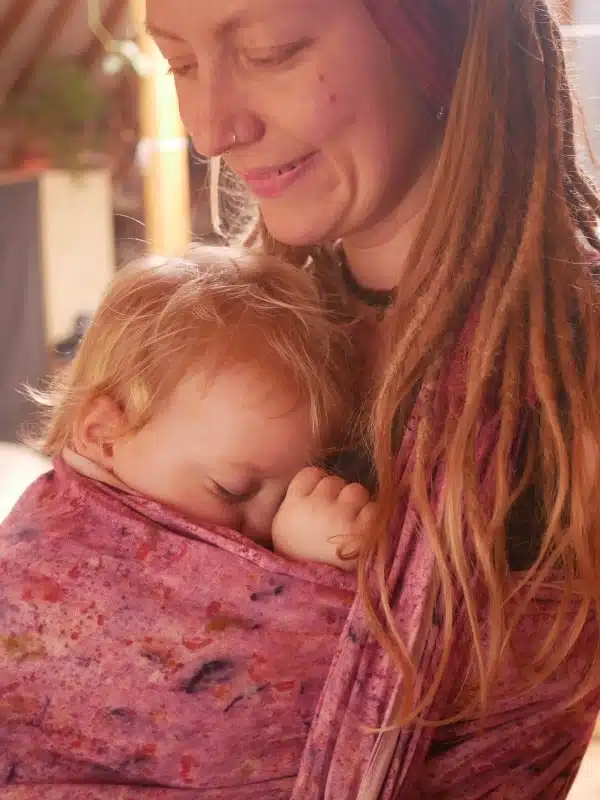
Aim for the M-position (knees higher than bum), a posterior pelvic tilt, and clear airways (face always visible). The fabric should support from knee-pit to knee-pit without restricting movement. Good support lightens the load on your shoulders and back, making longer carries comfortable.
Style & design

From solids to statement patterns, pick a design you enjoy and can mix easily with your wardrobe. Light tones feel bright, dark tones are low-maintenance; patterned wraps often hide little stains better.
Conclusion: you can’t go wrong

The best wrap is the one you love to use. Prioritize material, size, and ergonomics — and trust your instincts. That’s how you’ll find the companion that brings you close and truly simplifies your day.

Baby Wrap instead of Stroller – The Surprising Benefits in Everyday Life
Strollers are considered a must-have for new parents – but what if you need one [...]
Apr

Babywearing Without Back Pain – 5 Common Mistakes and How to Fix Them
Babywearing should never be painful — quite the opposite. When done correctly, it’s a beautiful [...]
Nov

Carrying babies in winter
When the days get shorter and the cold starts to creep in, many parents ask [...]
Nov

The Ultimate Material Guide for Baby Wraps & Ring Slings in Autumn
Autumn is here, bringing cooler days that invite us to dress warmly and cozily. As [...]
Nov
Choosing Your First Baby Wrap: Materials, Size & Ergonomics — Your Beginner’s Guide to Wraps & Ring Slings
Choosing your very first baby wrap or ring sling can feel overwhelming. With a little [...]
Oct
Carrying and siblings: Sensitive tips for young mothers
Life as a new mom brings plenty of challenges — and countless little joys. One [...]
Oct
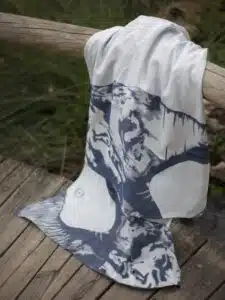
Autumn Walks with a Ring Sling: Flexible, Close & Safe — Best Spots, Tips & Checklist
Autumn is a magical season—leaves glow in warm colors and the air feels crisp and [...]
Oct

Layering when carrying your baby: How to dress yourself and your baby properly
Life as a new mom is full of fresh challenges—and beautiful shared moments. When you [...]
Sep
Frequently asked questions (FAQ)

- How long can I carry my baby in a wrap?
As long as it’s comfortable for both of you. Many families carry well past the first year — listen to body cues and take breaks. - Is babywearing in a wrap healthy for my baby?
Used ergonomically, it supports a healthy posture and fosters bonding. Aim for the M-position and clear airways. - What if I struggle with tying?
Follow step-by-step guides/videos and consider a local babywearing consultation to refine technique. - Can I use a wrap for a newborn?
Yes — many woven wraps and ring slings are newborn-friendly. The key is firm, supportive tightening and visible airways. - Which carry is best for newborns?
Usually a front carry at kissable height. As control improves, hip — and later back — carries become options.
 Business